Jo
Wolf HallJo is a girl in Thomas Cromwell’s household whose small acts of service bring its intimate life into view. Sewing letters for Cardinal Wolsey, joining the children’s games, and carrying messages between adults, she belongs to a family shaped by both bereavement and the political and religious conflicts of the age.
Identity and Household
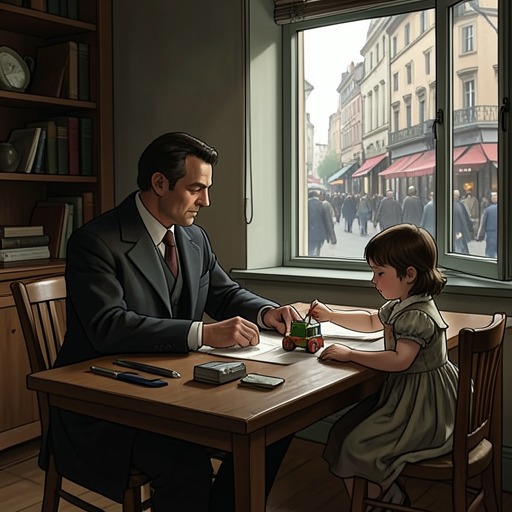
Jo appears among the children and young people living under Cromwell’s roof, alongside Alice, Gregory, and the household’s older women. When Alice tells Thomas Cranmer that the children are racing Gregory’s greyhounds through the hall, Jo is part of the noisy, unrestrained domestic scene. Their freedom is striking to Cranmer, who asks whether the children are whipped; Cromwell explains that they try to teach by example, even if the household does not always manage to keep quiet.
Jo is also connected to the adults through practical work. While Cranmer waits to send a dispatch to Wolsey, Alice reports that Jo is standing by with needle and thread. The detail places her within the everyday labour that sustains Cromwell’s household and its political correspondence, without making her simply an observer of adult affairs.
A Child’s Petition for the Dead
On All Souls’ Day, Jo joins Alice in asking Cromwell to write to Wolsey and have him petition the Pope to release their aunt Elizabeth, his dead wife, from Purgatory. The children distinguish her case from that of Cromwell’s daughters Anne and Grace, who, they suggest, have not been dead as long and may have more suffering to endure. Their appeal turns grief into a concrete request, framed through the religious beliefs and intercessory networks familiar to them.
Jo adds a practical calculation to the plea: Wolsey might send the Pope a present, since their aunt Mercy says that the Pope does nothing except for money. The remark draws together a child’s matter-of-fact understanding of patronage and the household’s concern for the dead. Cromwell does not dismiss the request; he takes the children to speak with Mercy and their mother, and then reassures them that they have done nothing wrong.
Faith, Family, and Changing Terms
The children’s petition unfolds amid a household divided over religious belief. In the ensuing dispute, Mercy argues that Christ’s words about the sacrament mean that it signifies his body, while Cromwell insists that Christ said it is his body. Alice answers that God can do anything, and Jo’s mother Johane rebukes the child. The scene places Jo’s family within the religious disagreements that make Austin Friars, in Cromwell’s description, a small world of its own, repeatedly pressed between old loyalties and new teachings.
Jo’s own response is quieter and more practical. Cromwell offers her a present for sewing the cardinal’s letters, as well as a gift for Alice, but the children are no longer interested in marmosets: they say such creatures are out of fashion at court since Anne Boleyn arrived, and ask instead for Bella’s puppies. Cromwell postpones that wish. The exchange shows Jo sharing in the household’s everyday attachments and its awareness of court fashion, even as the children’s wishes remain subject to adult decisions.
Messages and Domestic Memory
Jo carries a message from her mother to Cromwell asking for a drinking cup made from a griffin’s egg, a fabulous object described as belonging to a lion with a bird’s head and wings. Cromwell answers by asking what colour she wants, accepting the request as part of their familiar exchange rather than correcting its impossible premise. Jo then kisses his cheek. The moment gives their relationship an affectionate, unceremonious texture, set against the household’s arguments and losses.
Jo also participates in the household’s quieter attempts to maintain connection. After Cromwell and Mercy have reached a different understanding of their relationship, Jo brings him a plain white Easter egg, crowned by a small curl of hair. She says her mother sends it as a gift and repeats the request for the griffin-egg cup. Her delivery makes her a link between Cromwell and Johane, while the egg’s plainness and the child’s message keep domestic memory present within a household whose circumstances are continually changing.
Narrative Role
Jo is not given an independent political role; her importance lies in the relationships and household practices through which the novel makes large changes tangible. Her sewing supports Wolsey’s correspondence, her petition gives expression to the children’s grief for Cromwell’s dead wife, and her messages connect Cromwell with Johane. In scenes of religious disagreement and political uncertainty, the children’s questions and requests show how public conflicts enter the home—not as abstractions, but as matters of belief, affection, fashion, gifts, and the fate of the dead.